
Contact
Language
Fintech Trends
Published on:
July 23, 2025
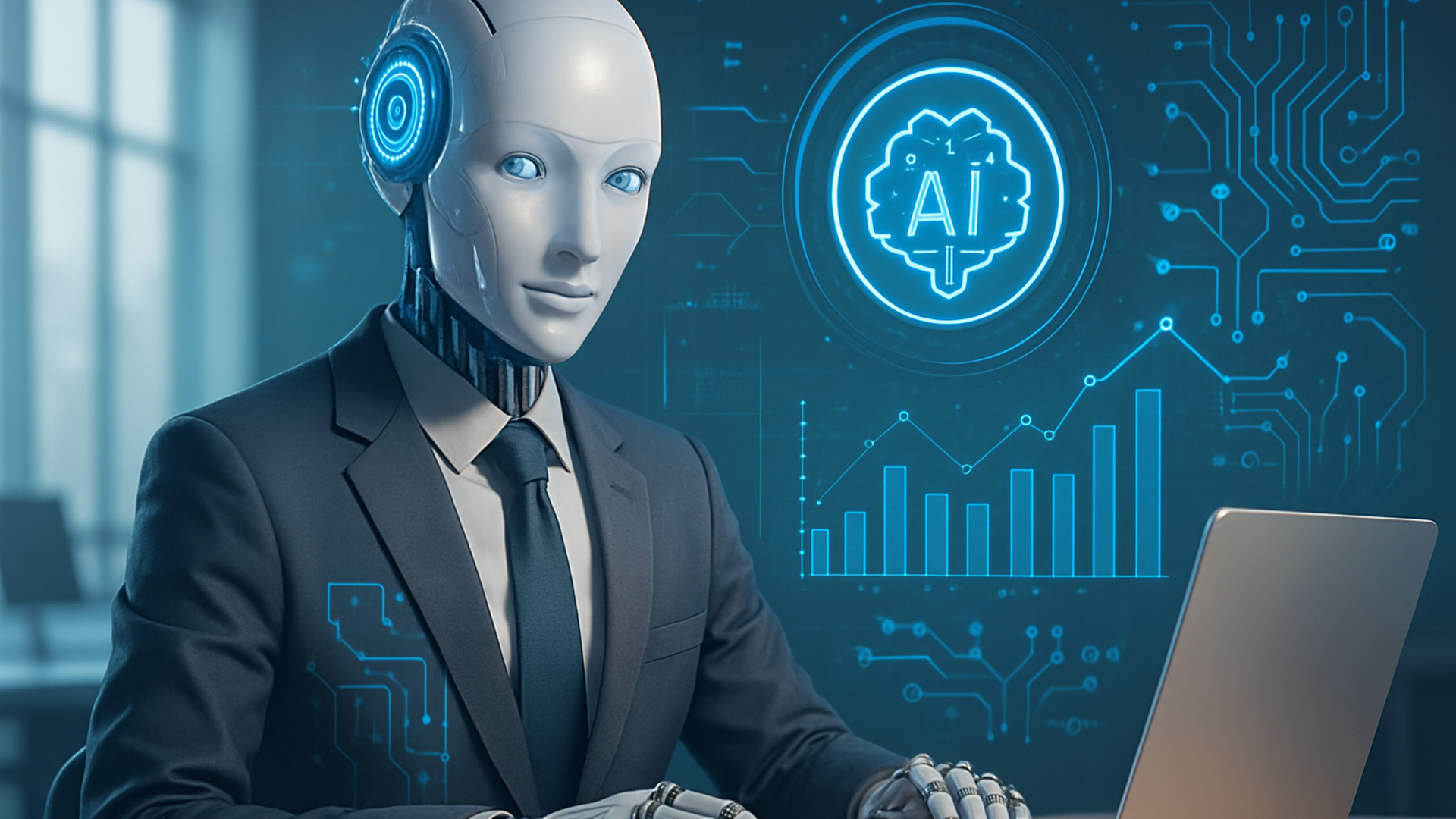
Back in the day, an employee with digital skills was referred to as a “digital worker”. More recently, the market has redefined that term and described it as a category of software robots that work alongside human coworkers to complete particular tasks or procedures.
Similarly to human employees, digital workers report to direct managers and work autonomously. From reconciling payment instructions to scanning software code for security flaws, these AI-powered employees are transforming back-office operations and prompting banks to rethink how they define productivity, compliance, and even employment itself. AI-powered employees will change how companies operate, but to what extent?
Digital employees are intelligent AI agents built specifically to take on operational tasks that have been previously performed by humans. However, they work faster, continuously, and with fewer mistakes. They are designed to:
Unlike traditional automation, AI-driven employees aren’t just workflows. They are autonomous agents that understand context, follow business logic, and decide within their tasks.In the companies where digital employees have already been deployed, they are used for:
Banks that have already piloted digital employees are reporting significant benefits and gains, which include faster turnaround due to 24/7 operation cycle times for routine tasks; reduced errors, as AI consistency improves data accuracy and compliance; lower costs and scalability since AI workers can be cloned or adapted for new functions with minimal investment.What’s important is that these agents do not replace entire jobs. Their goal is to take over repetitive, high-volume work, which results in more time for human employees to focus on decision-making and customer experience.
The rise of AI in the workplace might trigger concerns about job loss; however, digital employees are built to represent augmentation, not a replacement. AI agents still need guidance, supervision, and design to perform their tasks, but they don’t sleep, make typos, or forget policies. Instead of eliminating roles, banks are shifting human efforts into strategic, analytical, or customer-facing roles, whereas digital employees focus on different goals.
With the rise of AI digital employees, there must be regulations and guidelines to be followed, since nothing comes without risks:
That’s why human oversight and transparent governance are essential. By designing ethical, unbiased frameworks and enforcing strict internal controls, digital employees might be the key to a more efficient future.
The rise of AI-powered employees is restructuring how banks operate and signals a significant change in efficiency and innovation. Those systems were not built to replace people; their goal is to remove the burden of repetitive, error-prone tasks off human shoulders, which allows them to focus on strategy, creativity, and customer relationships.However, it must be remembered that transformation does not come without responsibility. To deploy an AI digital workforce, banks have to balance between innovation and oversight. That means building robust governance frameworks, addressing ethical concerns, and investing in employee training. Trust must be earned through transparency, accountability, and results.Most importantly, this shifts how we look at the collaboration itself. The workplace is no longer run solely by humans; they are being accompanied by software agents that work alongside, adapt to the processes, and contribute to measurable outcomes. The hybrid workplace model is still evolving, but the goal is clear: faster, smarter, and more efficient operations.As we move forward, the institutions will lead an AI-enabled future. However, it won’t be just companies with the best models or the biggest budgets. The firms that will be at the top of this shift will embrace the change thoughtfully with centre ethics and inclusivity, and recognize that the progress is not just about what technology can do but about how people and machines can do it together.Extentum AI is an ideal solution for companies that want to remain in control of this shift. LLM-based solutions offered by Finanteq can be easily integrated into business operations, allowing AI-powered employees to take on the burden of specific tasks.





ul. Nałęczowska 16
20-701 Lublin
Poland, European Union
contact@finanteq.com
+48 81 536 9692
FAX: +48 81 536 9695


Copyright © FINANTEQ SA 2025